On staying creative

How do you stay creative during awful times?

I’ll be honest: Sometimes, you don’t.

I’ve been perpetually reading the news (and largely *not* reading social media) for weeks, feeling alternately horrified, furious, and despondent about the future. Feeling nervous about wearing a Star of David in public and then stubbornly doing it anyway. Feeling guilty about being able to do something normal like celebrate Halloween, and then stubbornly doing *that* anyway because the people who hate you don’t want you to be happy. And then watching bad horror movies at night to give my brain a rest. Where am I writing in all this? Not much. Writing generally doesn’t look like “work”; it looks like the writer is zoning out in front of a screen or a notebook. But at some point the writer will tap the keyboard, or grab the pen, and create words. I keep getting stuck in the zoning-out phase, too snarled up for words.

Anyway. I’m not a fan of those writing “rules” in the first place: *You need to write every day or you’re not a real writer, you need to write 5,000 words a day or you’re not a real writer.* That’s nonsense. People have jobs, families, they have to do laundry, they have to feed the cat, they have to go vote, they have to get the car fixed. You write what you can, when you can, and you learn what you can from the writing. I’m not working on much right now, and the short story that would normally take me a few days is taking weeks. So be it. The story will wait for me. It will be there when I’m ready to finish it. So will all the other stories.

How do you stay creative during the awful times? Get through the awful times first. Then focus on being creative.

My updated list of organizations to donate to is below; new additions are at the top and this is not in any order of importance. Stay well, stay safe.

Erika Dreifus runs the terrific The Practicing Writer e-newsletter for poets and authors; she posted a list of organizations to help. Her post is well worth reading.

Journalist Sonia Weiser has launched a GoFundMe to start a Middle East Conflict Reporters Therapy Relief Fund to help journalists deal with the trauma of covering the Israel-Gaza war (speaking from experience, journalists are frequently underpaid and do not always have great health insurance)

Sulala Animal Rescue is the only animal rescue shelter in Gaza; it’s raising funds through Animals Australia

National Council of Jewish Women is a women- and family-centered social justice group that’s raising funds to provide basic needs, counseling, and advocacy for women and families impacted by the Hamas attack

Women Wage Peace is a women-led, nonpartisan grassroots group that advocates for a diplomatic solution to the Israeli-Palestinian conflict

World Central Kitchen is feeding displaced families in Israel and working with a local partner in Gaza to distribute meals to Palestinians

Soroka Medical Center is handling the emergency medical response in Israel

The JDC helps Jews and others in crisis around the world

Save the Children is trying to get needed supplies into Gaza

American Friends of Magen David Adom is Israel’s first aid/first responder service

United Hatzalah is a volunteer emergency medical services organization that operates across Israel

Americares is trying to assist with people’s medical needs in Gaza

Doctors Without Borders is trying to assist with people’s medical needs in Gaza

The International Committee of the Red Cross is providing medical supplies and household items to people in Gaza and trying to help people in Israel locate missing family members
The Forward has a longer list of organizations that need help. And CNN has set up a fund that allows you to donate to multiple organizations at once, including several listed above.

News and updates

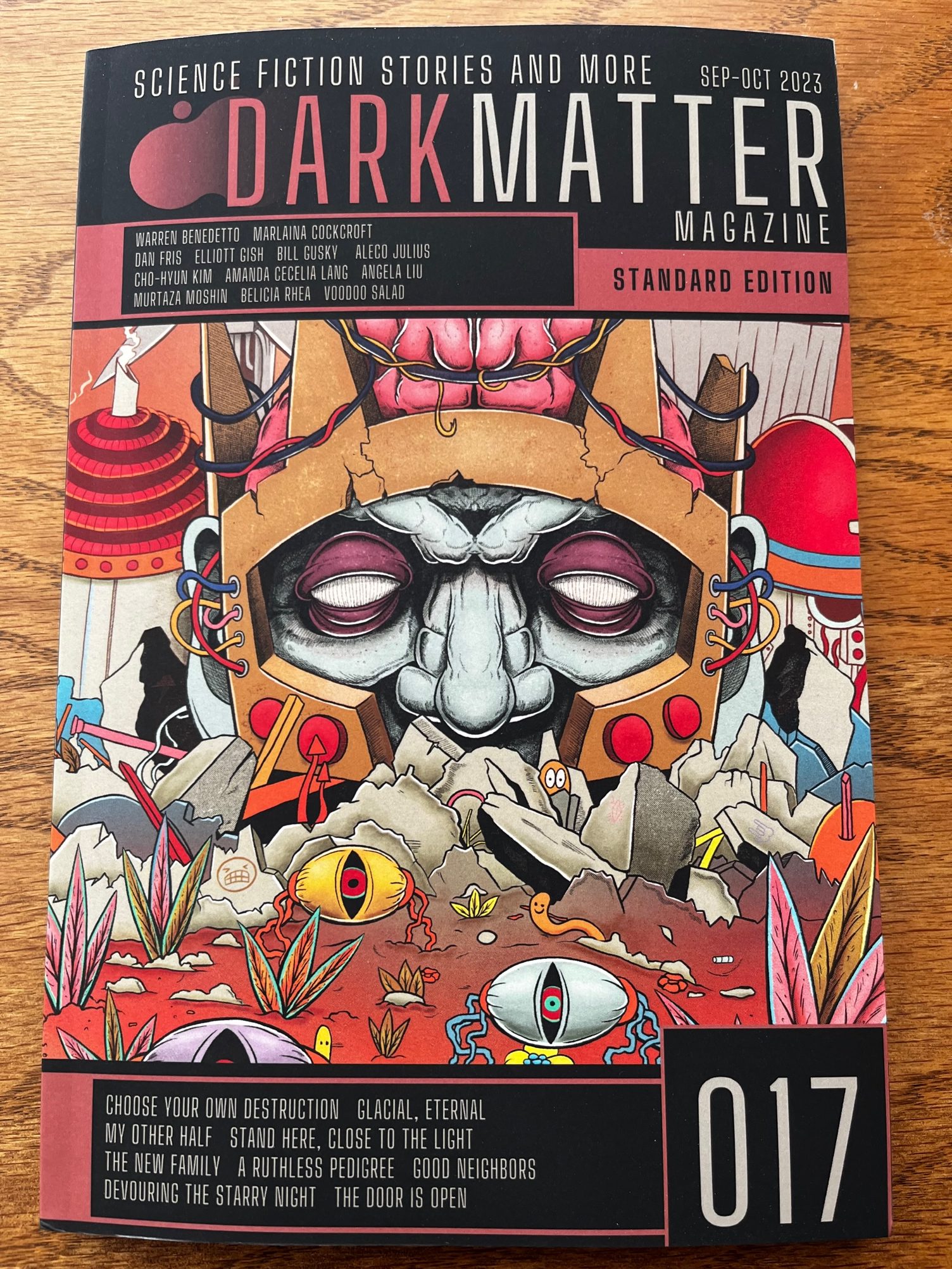
I’ve had the pleasure of being published twice this month, both horror stories. My creepy gardening story “Good Neighbors” is in issue 17 of Dark Matter Magazine, which is unfortunately one of the final issues of the magazine because Dark Matter Media is pivoting to do more anthologies and other projects. They’re lovely to work with *and* they send thank-you notes to contributors, so I’m hoping I’ll get a chance to work with them again.

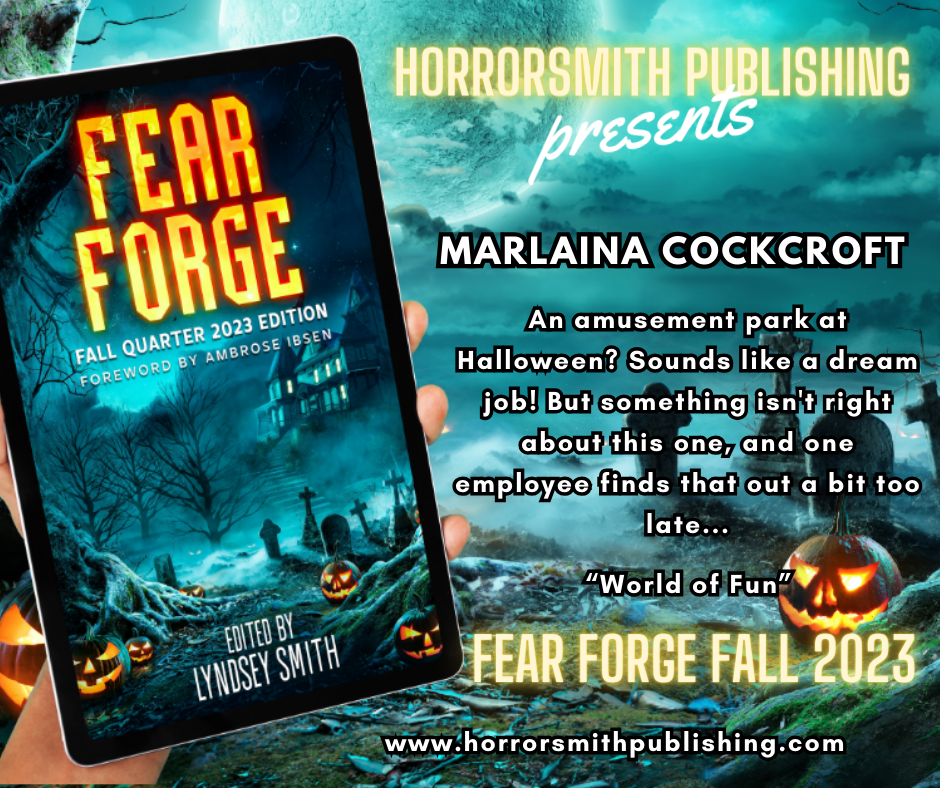
My dead-kids-in-an-amusement-park story, “World of Fun,” appears in the fall 2023 edition of Fear Forge Anthology. I’m pretty happy about this one because I’ve been trying to get this story published for a while, and I’m so glad people can read it now. Obviously any resemblance to real-life amusement park incidents, say in the 1980s, is entirely coincidental. The editor is a sweetheart and as you can see, produces some pretty nice promo images for her authors.

Why read horror when there’s so much real-life horror out there? Because any fiction is escapism of a sort. Because grim times call for grim entertainment. But mainly because horror stories can offer a weird sort of hope; there may be monsters in the world, but the monsters can be beaten. And maybe the misunderstood monsters can find a place in the world after all.

This is the quote I’m thinking of, and if you’re also a Neil Gaiman fan you’re not surprised. It’s from G.K. Chesterton, and it’s the epigraph to Coraline:

Fairy tales are more than true: not because they tell us that dragons exist, but because they tell us that dragons can be beaten.

***

And now back to real-life horror.

I’m adding a few more groups to this list of organizations helping civilians in Israel and in Gaza. I don’t know the status of Gaza right now, or when aid will be able to get through again, but I’ll keep listing those groups in the meantime because they’ll need the resources when they can get back in.

Stay well, stay safe.

National Council of Jewish Women is a women- and family-centered social justice group that’s raising funds to provide basic needs, counseling, and advocacy for women and families impacted by the Hamas attack

Women Wage Peace is a women-led, nonpartisan grassroots group that advocates for a diplomatic solution to the Israeli-Palestinian conflict

World Central Kitchen is feeding displaced families in Israel and working with a local partner in Gaza to distribute meals to Palestinians

Soroka Medical Center is handling the emergency medical response in Israel

The JDC helps Jews and others in crisis around the world

Save the Children is trying to get needed supplies into Gaza

American Friends of Magen David Adom is Israel’s first aid/first responder service

United Hatzalah is a volunteer emergency medical services organization that operates across Israel

Americares is trying to assist with people’s medical needs in Gaza

Doctors Without Borders is trying to assist with people’s medical needs in Gaza

The International Committee of the Red Cross is providing medical supplies and household items to people in Gaza and trying to help people in Israel locate missing family members
The Forward has a longer list of organizations that need help. And CNN has set up a fund that allows you to donate to multiple organizations at once, including several listed above.

How to help, part 2

I feel like the most useful thing I can do right now is keep posting donation links for Israel/Gaza, so I’ll do that. And another reminder: People who are downplaying or outright ignoring the devastation in Israel so that they can support Palestinians *are not helping*. Please spend some time researching the many nuances of this conflict, and please don’t act like grieving Jews don’t matter. It’s possible to want a better way forward for everyone.

If there are any groups I should add to this list, let me know.

World Central Kitchen is feeding displaced families in Israel and working with a local partner in Gaza to distribute meals to Palestinians

Soroka Medical Center is handling the emergency medical response in Israel

The JDC helps Jews and others in crisis around the world

Save the Children is trying to get needed supplies into Gaza

American Friends of Magen David Adom is Israel’s first aid/first responder service

United Hatzalah is a volunteer emergency medical services organization that operates across Israel

Americares is trying to assist with people’s medical needs in Gaza

Doctors Without Borders is trying to assist with people’s medical needs in Gaza

The International Committee of the Red Cross is providing medical supplies and household items to people in Gaza and trying to help people in Israel locate missing family members
The Forward has a longer list of organizations that need help. And CNN has set up a fund that allows you to donate to multiple organizations at once, including several listed above.

Stay well and stay safe.

Unmuting to say …

I’ve been off social media this week. I know better to expect nuance or thoughtfulness or, largely, support when it comes to Israel. And I can’t see the point of opening myself up to even more antisemitism, especially when my kids were dealing with various antisemitic microaggressions even *before* this past week.

But it shouldn’t be hard to denounce terrorism. It shouldn’t be hard to say that civilians should never be targets. Yes, I mean all civilians.

I’m also not the expert in a country I’ve never been to, so I’ll leave the in-depth commentary to people who do have that expertise. When there’s an attack or a war or a natural disaster, I’d rather look for ways to help; to me, that means giving money or resources to the groups on the ground. This week I donated to the JDC, which helps Jews and others in crisis around the world, and American Friends of Magen David Adom, Israel’s first aid/first responder service. The Forward has a longer list of organizations that need help. And Americares is trying to assist with people’s medical needs in Gaza.

Stay well, stay safe, hope for better times.

The state of school libraries

My latest article for School Library Journal is about book challenges in school libraries across the nation. No, it’s not pleasant. Yes, it’s worth reading. And so are the books being challenged.

Librarians are the keepers of information in our society, and they shouldn’t be harassed and targeted for doing their jobs.

If you’d like to learn more, you can download SLJ’s full Controversial Books Survey. If you want regular updates about book challenges and advice on what to do about them, check SLJ’s coverage or Kelly Jensen’s weekly roundup in Book Riot.

My personal advice? Show up at your town’s school board meetings. You might not have a local newspaper anymore, and you should stay informed about what your school board is doing—and you shouldn’t let them or librarians be bullied into taking actions that would hurt people.

Good luck, and happy Friday.

My Q&A with Super Copy Editors

Super Copy Editors is where I do a fair amount of my freelance work—it’s a great company, and founder Dave Baker is a pleasure to work with. He interviews one team member every month for the company newsletter, and I enjoyed the interview so much I requested to share it. So here it is, for your reading pleasure. Have a lovely week.

In person, again

I thought I’d remembered everything about in-person writers’ conferences. Bring a scarf or wrap. Wear comfortable shoes. Bring a notepad and pen for when you get good advice or when inspiration strikes. Caffeinate regularly. But nope, I forgot that the air conditioning would also be intense enough to affect my feet. I spent half the day thinking sandals, ugh, where are my sneakers? Listen, it’s been a few years.

I’ve spent most of this year feeling like we were finally easing back into something more or less resembling regular life. We restarted our annual Super Bowl party. I started leaving the house without a mask in my bag. We hung around older family members without worrying about anyone’s exposure levels. And NJ SCBWI held an in-person conference again.

I’m glad there are more virtual options out there now for conferences, workshops, and webinars. They’re a lifeline for people who can’t travel, who need disability accommodations, or who are immunocompromised. But I never feel fully connected to people through a screen. I’m the sort of introvert who works best in one-on-one interactions, where I can see the other person’s face and hear their voice. Without that, I feel like I’m missing vital information. With that—well, every writer friend I have is someone I met at a conference or other event. One of those friends led me to my critique group. I’ve gotten editing work through writer friends, I’ve gotten feedback that helped me improve my own work, and I hope I’ve helped other people improve theirs. More intangibly, I’ve developed a sense of belonging. When I walked into the conference building, I saw people I knew, people I hadn’t seen in person in years. It felt like a homecoming. And that alone was worth the price of admission.

So thanks to NJ SCBWI for putting the event together (standouts for me: Andrea Loney’s “Creator Care” presentation and Yvonne Ventresca’s workshop on revision tools and techniques), and thanks to Montclair University for hosting. I was really grateful to be around my fellow creatives again. Even with cold feet.

(But please keep the coffee coming next time! I really do caffeinate continuously.)

Finding a critique group

My primary critique group is kidlit-only and everyone in it is fabulous. But since they are kidlit-only, I couldn’t bring them the short stories I increasingly write for adults. Especially since some of those stories are horror. Picture books don’t exactly go along with, um, carnage. (Unless the picture book is “I Want My Hat Back,” but that’s probably an exception.)

So I went looking for a secondary critique group for my short stories/novellas/whatever else I decide to write for adults. Finding a group can be the easiest and the hardest thing to do. Because while there are writers’ groups, both in-person and online, that advertise for new members, and there are plenty of places around social media where you can link up with potential critique partners, you don’t want just any group. You want the group that makes the most sense for you.

First of all, there’s a difference between support groups and critique groups. With a support group, you can get together and vent. You can talk about how tough the industry is. You can lift each other up, help each other to keep pursuing their creative dreams. Support groups are good for the soul and your sanity. (I have one of these groups, too! I recommend them.) But they don’t help you improve your writing.

Critique groups are specifically focused on the craft. You meet to read and discuss each other’s work, whether that’s a complete story, an excerpt of a longer work, or a full novel. There are plenty of guidelines out there for how to do this professionally—in other words, how to give useful feedback without being a jerk. This post has some good suggestions, for instance.

My point isn’t so much the mechanics of critiquing, though. It’s making sure you and the group are aligned. Are you all looking to get published? Are you all writing in the same, similar, or complementary genres? How much time are you able to devote to writing and revising each month? Can you all commit to meeting and providing feedback regularly? Will each member of the group get equal time to share their work?

Here are some of the reasons I’ve seen critique groups fall apart. A member never actually finishes any manuscript—they keep rewriting chapter one over and over. One prolific member insists on their work being read constantly, ignoring the needs of other members, until they entirely overtake the group. Members are perpetually too busy to commit to regular meetings or to write anything new. Members are either hostile to constructive criticism or incapable of giving constructive criticism. You need structure, you need consistency, you need everyone working toward the same goal—even if they’re each doing so in their own way.

When you’re looking for a group, audition it. Attend a few meetings, try to get a sense of what the other members are like. Make sure their level of commitment is similar to yours. They’ll likely be evaluating you as well. The right fit benefits everyone.

As for me, I found a new group through Uncharted magazine, which organized a digital critique group meetup. They’ve only done this once so far, but maybe they’ll do a round two at some point? Otherwise, if you’re in need of a critique group, check the official sites of writers’ organizations and poke around social media. You’re bound to find something. Good luck and keep writing.

On persevering

I sold three short stories last month. One sale was a reprint of the first short story I’d ever written. One was the second time I’d submitted that story anywhere. And the third was a story I’d been trying to get placed for at least a year and had been racking up rejections for my trouble. All three sales made me happy (especially the one I got emailed about on my vacation. Pretty good reason to justify checking my email in the middle of Animal Kingdom!). I can’t wait for readers to see these stories. In fact, you can read one of them now.

There are a couple of conclusions to draw here. First, obviously, is that the submission process for short stories is fairly subjective, and sometimes you need to keep trying to find the editor who loves your work. Second, you can’t take rejection personally, although you’re still allowed to hate it. (I find chocolate is helpful in these situations.) Third—most important—getting your stories out there is a numbers game. The more you submit, the more likely you are to get acceptances. You can’t win if you don’t play.

A reminder: Getting an encouraging rejection letter with helpful feedback also counts as a win. An editor asking to see more of your work? Definitely a win. Dusting yourself off after a discouraging rejection and sending that story somewhere else? That’s a win too.

I’m waiting to hear back on a couple of other short stories. They’ll get accepted or they won’t. If they’re not accepted, I’ll try again.

This process takes a lot of work and time, which can be a little frustrating if you also have a day job (what do I do at my day job? Articles like this, among other things). But it’s work that’s worth doing, and it’s for you. The only expectations you have to meet are the ones you set for yourself.

Keep writing, keep submitting, keep persevering.

Back to work, back to life

*Taps mic* I think this thing is still on, right?

So, it’s been an interesting few months. I left my freelance career for a full-time job, and that job let me go after a year. I thought an agent was interested in representing my book, but she apparently changed her mind before I ever sent her the revisions she requested. And I quit the critique group I’d been testing out over excessive mansplaining.

And that was just *September*.

I started rebuilding my freelance work, I sent out more queries, I submitted more short stories. I collected more rejections. Then I finally got Covid. Happy holidays!

(I’m fine. It was mild.)

So here I am, starting over in every way possible. That’s not necessarily a bad thing. I got to do two library presentations last year and it was fun. I did finally catch up on my reading, including this fundraiser anthology, which is phenomenal, and this cool-as-heck Jewish anthology, which I joined the Kickstarter for. I’m waiting on a contract for a short story. I’ll spend the month planning out the year as I keep working to get my middle grade novel published. Plus the other short story and the novella I’m working on. You never know which seeds are going to sprout into something beautiful.

I hope you also have a creative January. Stay healthy out there.