In which I win an award

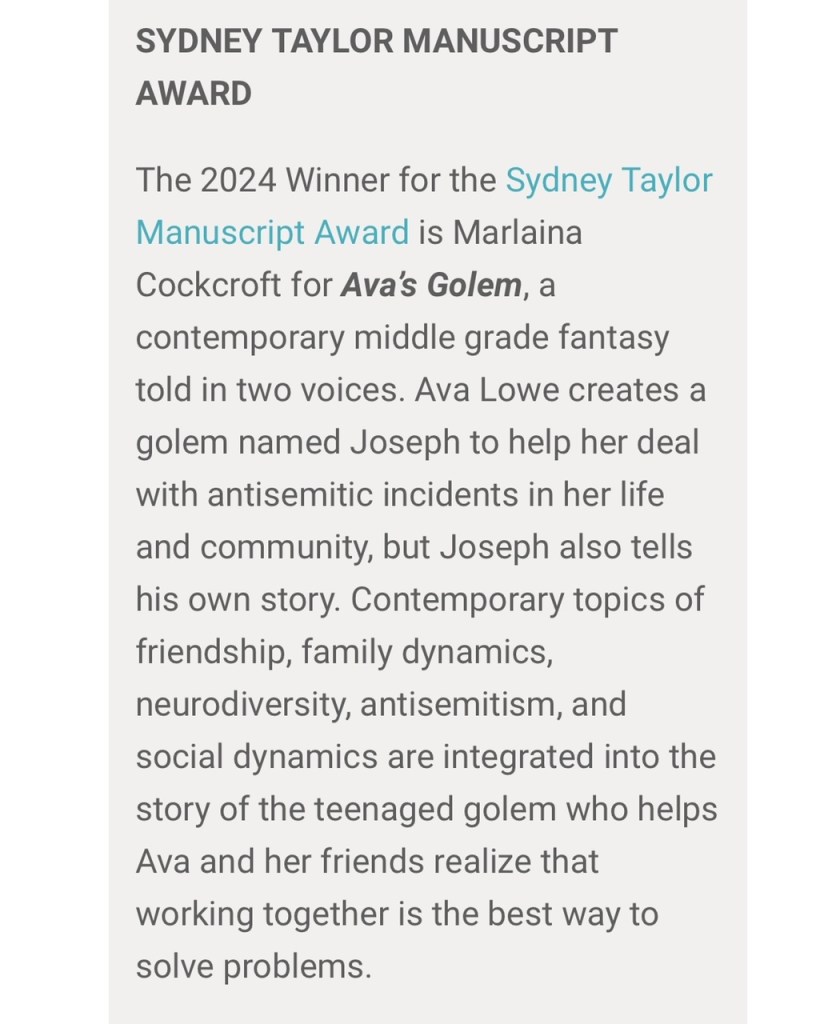
Last week, I flew to San Diego to officially accept the Sydney Taylor Manuscript Award for my middle grade novel at the Association of Jewish Libraries annual conference. I had a great time! Everyone was so nice and welcoming, my speech went over well (after a lovely introduction by incoming Manuscript Committee coordinator Talya Sokoll), the panels I attended were really interesting, and several of the attendees told me they hoped to see my book published. Plus name-checking Lord of the Rings in my speech prompted a couple of librarians to nerd out about Tolkien with me afterward.

I also got to meet a number of authors in person I only knew online or had interviewed by phone for my SLJ article, which was a lot of fun.

I’m not frequently in a space with a lot of other Jews at once, so I appreciated that—especially seeing how inclusive a space it was, from observant Orthodox Jews with their hair covered to more secular types like me (and my not-Jewish husband). There was a space set aside in the hall for people to ritually wash their hands and say the blessing over the bread before dinner, but that was optional, not required of everyone. (Many Jews will say the blessing over the bread to include the entire meal, before they touch any other part of the food.)

I’d been worried about the safety of the event, given current events, but there were security guards everywhere at all times. Should any gathering of Jews need that much security? No. Was it reassuring to see them? Yes. Plus they were super friendly.

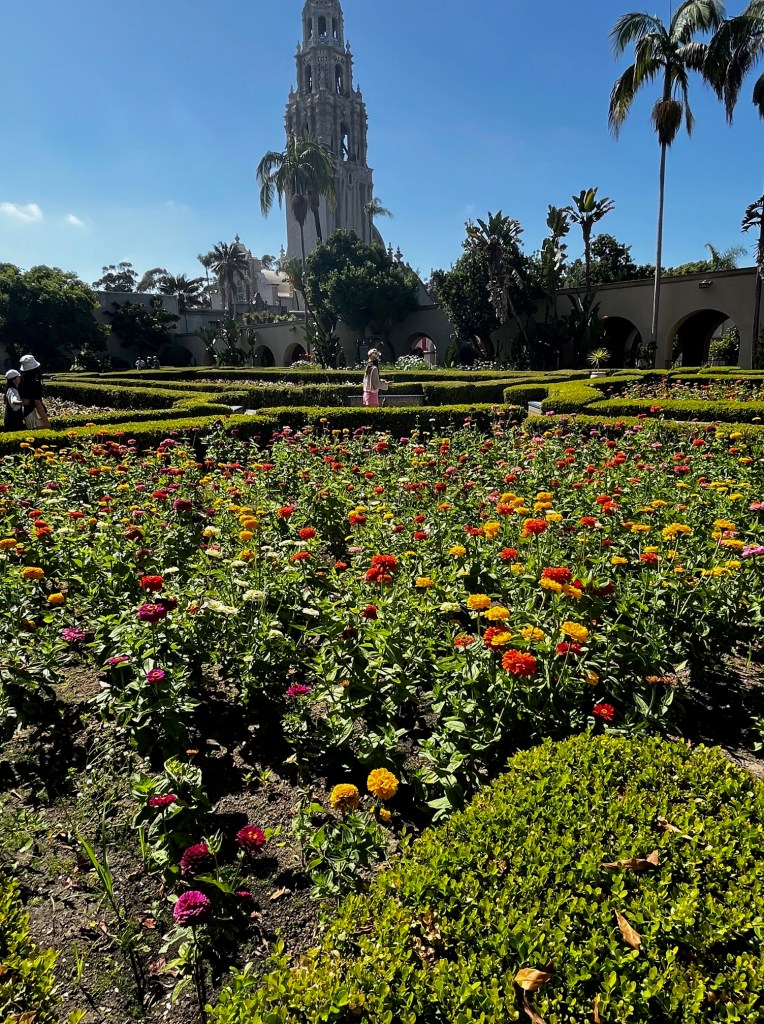
And we even got in some sightseeing before we headed home. Pics below, from the awards night and from playing tourist:

During my speech.
Posing afterward with Talya.
At the Air and Space Museum.

Around Balboa Park.

Why I talk about antisemitism

A few years ago—pre-pandemic—I attended a workshop on diversity in children’s literature. Before the workshop leader got started, she had us write down and then share the parts of our identities that made us “diverse,” I think to prove the point that we’re all more diverse than we realize. I hesitated before writing down Jewish. Did that count as diverse? I wasn’t sure. Judaism, or religious minorities generally, never seemed to be part of these discussions, and I hadn’t quite gotten to the point of writing Jewish characters in my fiction. But I shared it anyway.

I don’t remember much of the workshop, except that she said diversity was important, which seemed like a pretty basic thing to agree with. Afterward, I was handing in the post-workshop survey when the leader and I got to talking. She remembered I was Jewish. And she started complaining to me about the Hasidic Jews in Rockland County, NY. Oh, they’re so rude, oh they’re so pushy, oh they’re so etc.

I stood there in shock. What was I supposed to say? Was she telling me this because she expected me to agree with her, or to apologize to her on behalf of “my people”? And hadn’t she just run an entire workshop on the importance of diversity?

I got out of that conversation in a hurry. My only takeaway from that workshop is that I wasn’t supposed to be included in it.

Antisemitism can look a lot of ways, which is why it can be hard for people to recognize it when it’s staring them in the face. One way is to see a secular Jew, think “Hey, she’s one of the cool ones, I can say stuff to her,” and say mean things about more religious Jews. Yeah … please don’t do this. Hasidic Jews, or ultra-Orthodox Jews in general, lead very different lifestyles than I do, but they’re still my fellow Jews and I support them. Especially since they’re a much more visible target for harassment or abuse than someone like me.

Because antisemitism is hard to recognize, I think people don’t always realize how widespread it is. A few months ago, I was at an event chatting with someone who also happened to be Jewish. We started comparing notes on our childhoods, in completely different areas of New Jersey: Oh, you had pennies thrown at you? Me too. Yeah, the kids called me names too. The third person in our conversation, who wasn’t Jewish, listened with increasing astonishment. How did we have such similar experiences? She’d never heard of this sort of thing happening before. Why would children do this?

And because people don’t see this particular form of hatred, it festers and continues.

It’s a fraught time to have this conversation, given current events. But we always need to have this conversation. There will always be another reason, as Dara Horn says (read People Love Dead Jews if you haven’t already), that we need to justify our existence to people.

I started writing my middle grade manuscript—about golems, and magic, and a couple of neurodivergent kids dealing with antisemitism—around 2019. It’s been immensely frustrating watching the manuscript get more relevant every year. I would’ve preferred that it become outdated, and that my kids not have to deal with jokes about Hitler or overhear comments about how “Judaism isn’t a real religion!”

I’d rather not talk about these things. But someone has to talk about these things. Naming problems is the only way to solve them.

Thanks for listening.

***

There are various groups trying to get aid to people in Gaza and in Israel; I don’t know how successful they are right now, but it’s worth helping them. Stay well and stay safe.

Project HOPE offers training and support to health care workers and health care services around the world; it’s helping coordinate delivery of needed equipment, supplies, and services to people in Israel and Gaza

The Alliance for Middle East Peace is a coalition that works to build trust between Israelis and Palestinians; it’s creating emergency shelters, collecting donations, and offering support in other ways

The UN’s World Food Programme supplies food and vouchers to people in Gaza and the West Bank

IsraAID is the largest humanitarian aid group in Israel, according to its site, and it responds to crises worldwide; it’s helping with humanitarian activities and mental health support for Israeli evacuees

The Palestine Children’s Relief Fund has been sending food, water, and medical supplies into Gaza

Sulala Animal Rescue is the only animal rescue shelter in Gaza; it’s raising funds through Animals Australia

National Council of Jewish Women is a women- and family-centered social justice group that’s raising funds to provide basic needs, counseling, and advocacy for women and families impacted by the Hamas attack

Women Wage Peace is a women-led, nonpartisan grassroots group that advocates for a diplomatic solution to the Israeli-Palestinian conflict

World Central Kitchen is feeding displaced families in Israel and working with a local partner in Gaza to distribute meals to Palestinians

Soroka Medical Center is handling the emergency medical response in Israel

The JDC helps Jews and others in crisis around the world

Save the Children is trying to get needed supplies into Gaza

American Friends of Magen David Adom is Israel’s first aid/first responder service

United Hatzalah is a volunteer emergency medical services organization that operates across Israel

Americares is trying to assist with people’s medical and mental health needs in Israel and in Gaza

The International Committee of the Red Cross is providing medical supplies and household items to people in Gaza and trying to advocate for hostages still being held in Gaza

An award, and validation

I’d been starting to wonder if I should keep trying to write for children.

Kidlit can be a tricky industry to break into (along with publishing overall), and sending my work out was starting to feel like shouting into the void: no one was answering. Meanwhile, my short fiction for adults was getting published. Maybe I was shouting at the wrong place?

I submitted my middle grade manuscript to the Association of Jewish Libraries’ Sydney Taylor Manuscript Award, figuring nothing would come of it, and I went about my day.

… and then I won.

I really wasn’t expecting to win. I’m still pinching myself. It feels amazing to know the committee liked my story, and that this award could help me someday get it into readers’ hands.

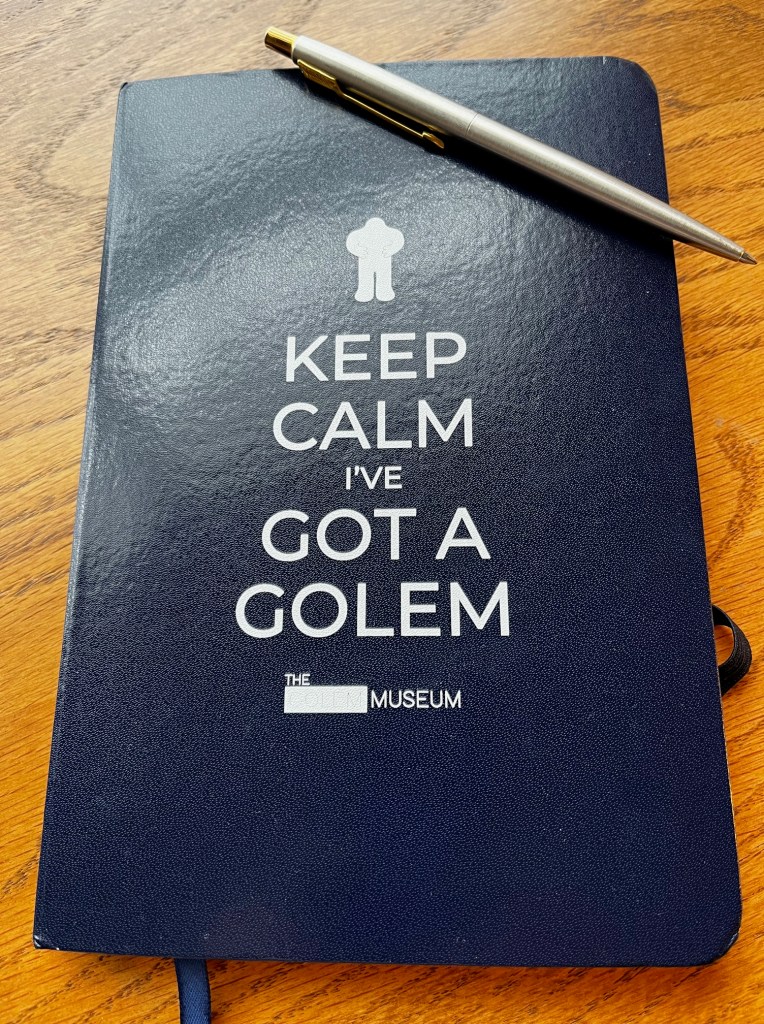
Also, I love golem stories! I’m mildly obsessed. See: my current writing notebook. (Not shown: golem pin, golem laptop sticker, golem desk figure, various golem books.) It’s especially great to be recognized for writing about something I love.

Even if it is frustrating to have watched the topic get timelier every year since I started writing the story. But that’s another post.

I thought I needed to stop writing middle grade, but it looks to me like I should keep going.

So if anyone needs me, I’ll be writing.

Reading, not writing

I was off traveling for a few days, and while it’s annoying that my MdDS symptoms have kicked back up a bit and I’m waiting for the earth to settle, it was also good to get away from the desk and do fun things. I had every intention of writing on the plane, but I also had a copy of Every Heart a Doorway, and sometimes reading > writing. (It’s a gorgeously dark story, read it.)

I actually don’t think it’s bad at all to read instead of write sometimes. How else would we know what good writing looks like? And why would we even want to write our own stories if we hadn’t grown up loving other people’s stories? Every book offers a chance to learn more about the craft. Sure, it’s research. But it’s fun research.

As I traveled, every so often, I noticed someone else wearing a Star of David necklace or a hamsa. I might not have looked for those signs before—not because it wasn’t important, but because I’ve spent so much of my life being the only Jew in the room that I’m used to it. But seeing those little bits of jewelry, quiet acknowledgments that you are not the only one and you are not alone, it gave my heart a lift. I hope they saw my hamsa necklace, and it made them feel the same way.

Now that I’m post-holiday post-vacation, it’s back to writing. I revised my creepy horror-in-a-mall short story, and once that’s back out seeking a home, I can focus on the quirky MG cryptid novel I didn’t work on during my flight. In between finishing up interviews for a magazine article. Here’s to productive days ahead.

***

I can’t tell how much charitable organizations are able to help right now. Some of the groups below haven’t updated their websites since December, or even earlier. But I’m listing them anyway on the chance that they are still getting aid to people in Gaza and in Israel. Please help if you can. Stay well and stay safe.

Project HOPE offers training and support to health care workers and health care services around the world; it’s helping coordinate delivery of needed equipment, supplies, and services to people in Israel and Gaza

The Alliance for Middle East Peace is a coalition that works to build trust between Israelis and Palestinians; it’s creating emergency shelters, collecting donations, and offering support in other ways

The UN’s World Food Programme supplies food and vouchers to people in Gaza and the West Bank

IsraAID is the largest humanitarian aid group in Israel, according to its site, and it responds to crises worldwide; it’s helping with humanitarian activities and mental health support for Israeli evacuees

The Palestine Children’s Relief Fund has been sending food, water, and medical supplies into Gaza

Sulala Animal Rescue is the only animal rescue shelter in Gaza; it’s raising funds through Animals Australia

National Council of Jewish Women is a women- and family-centered social justice group that’s raising funds to provide basic needs, counseling, and advocacy for women and families impacted by the Hamas attack

Women Wage Peace is a women-led, nonpartisan grassroots group that advocates for a diplomatic solution to the Israeli-Palestinian conflict

World Central Kitchen is feeding displaced families in Israel and working with a local partner in Gaza to distribute meals to Palestinians

Soroka Medical Center is handling the emergency medical response in Israel

The JDC helps Jews and others in crisis around the world

Save the Children is trying to get needed supplies into Gaza

American Friends of Magen David Adom is Israel’s first aid/first responder service

United Hatzalah is a volunteer emergency medical services organization that operates across Israel

Americares is trying to assist with people’s medical needs in Gaza

Doctors Without Borders is trying to assist with people’s medical needs in Gaza

The International Committee of the Red Cross is providing medical supplies and household items to people in Gaza and trying to help people in Israel locate missing family members

Letting a story steep

I finally found my way to a completed draft of that short story this week, and then let it sit a couple days while I played around with another story. Stories definitely need to sit. To steep, like tea. You need to leave them long enough to forget what you wrote, so that when you go back and revise it’s like you’re looking at someone else’s work, and you can be more objective. You’re more likely to see what’s missing—the plotline dots left unconnected, the character you never bothered describing—so that you can deepen and complete the work. (Critique groups help too! They’ll always see things you didn’t.)

Since I’m one of those throwback types who writes longhand first drafts (pretty notebooks are essential, Parker makes the best pens), typing the story into a Word doc also serves as my revision process; what I originally wrote changes as I type it. Your process may vary.

I’m trying to balance doomscrolling the news with staying productive. We’ll see how this week goes.

The weekly roundup, plus a few additional items of note:

Several organizations have teamed up to launch a site where college students, families, or staff members can report antisemitic incidents. And a group of Harvard students are collaborating on a text hotline in which Jews, Muslims, Palestinians, Christians, Israelis, and Americans are answering people’s questions about Israel-Gaza. It’s Harvard-only right now, but I’m including it because they’re hoping to take it nationwide.

Organizations to donate to are below; new additions are at the top and this is not in any order of importance. Stay well, stay safe.

IsraAID is the largest humanitarian aid group in Israel, according to its site, and it responds to crises worldwide; it’s helping with humanitarian activities and mental health support for Israeli evacuees

The Palestine Children’s Relief Fund has been sending food, water, and medical supplies into Gaza

Erika Dreifus runs the terrific The Practicing Writer e-newsletter for poets and authors; she posted a list of organizations to help. Her post is well worth reading.

Journalist Sonia Weiser has launched a GoFundMe to start a Middle East Conflict Reporters Therapy Relief Fund to help journalists deal with the trauma of covering the Israel-Gaza war (speaking from experience, journalists are frequently underpaid and do not always have great health insurance)

Sulala Animal Rescue is the only animal rescue shelter in Gaza; it’s raising funds through Animals Australia

National Council of Jewish Women is a women- and family-centered social justice group that’s raising funds to provide basic needs, counseling, and advocacy for women and families impacted by the Hamas attack

Women Wage Peace is a women-led, nonpartisan grassroots group that advocates for a diplomatic solution to the Israeli-Palestinian conflict

World Central Kitchen is feeding displaced families in Israel and working with a local partner in Gaza to distribute meals to Palestinians

Soroka Medical Center is handling the emergency medical response in Israel

The JDC helps Jews and others in crisis around the world

Save the Children is trying to get needed supplies into Gaza

American Friends of Magen David Adom is Israel’s first aid/first responder service

United Hatzalah is a volunteer emergency medical services organization that operates across Israel

Americares is trying to assist with people’s medical needs in Gaza

Doctors Without Borders is trying to assist with people’s medical needs in Gaza

The International Committee of the Red Cross is providing medical supplies and household items to people in Gaza and trying to help people in Israel locate missing family members

The Forward has a longer list of organizations that need help, and so does NPR. And CNN has set up a fund that allows you to donate to multiple organizations at once, including several listed above.

On staying creative

How do you stay creative during awful times?

I’ll be honest: Sometimes, you don’t.

I’ve been perpetually reading the news (and largely *not* reading social media) for weeks, feeling alternately horrified, furious, and despondent about the future. Feeling nervous about wearing a Star of David in public and then stubbornly doing it anyway. Feeling guilty about being able to do something normal like celebrate Halloween, and then stubbornly doing *that* anyway because the people who hate you don’t want you to be happy. And then watching bad horror movies at night to give my brain a rest. Where am I writing in all this? Not much. Writing generally doesn’t look like “work”; it looks like the writer is zoning out in front of a screen or a notebook. But at some point the writer will tap the keyboard, or grab the pen, and create words. I keep getting stuck in the zoning-out phase, too snarled up for words.

Anyway. I’m not a fan of those writing “rules” in the first place: *You need to write every day or you’re not a real writer, you need to write 5,000 words a day or you’re not a real writer.* That’s nonsense. People have jobs, families, they have to do laundry, they have to feed the cat, they have to go vote, they have to get the car fixed. You write what you can, when you can, and you learn what you can from the writing. I’m not working on much right now, and the short story that would normally take me a few days is taking weeks. So be it. The story will wait for me. It will be there when I’m ready to finish it. So will all the other stories.

How do you stay creative during the awful times? Get through the awful times first. Then focus on being creative.

My updated list of organizations to donate to is below; new additions are at the top and this is not in any order of importance. Stay well, stay safe.

Erika Dreifus runs the terrific The Practicing Writer e-newsletter for poets and authors; she posted a list of organizations to help. Her post is well worth reading.

Journalist Sonia Weiser has launched a GoFundMe to start a Middle East Conflict Reporters Therapy Relief Fund to help journalists deal with the trauma of covering the Israel-Gaza war (speaking from experience, journalists are frequently underpaid and do not always have great health insurance)

Sulala Animal Rescue is the only animal rescue shelter in Gaza; it’s raising funds through Animals Australia

National Council of Jewish Women is a women- and family-centered social justice group that’s raising funds to provide basic needs, counseling, and advocacy for women and families impacted by the Hamas attack

Women Wage Peace is a women-led, nonpartisan grassroots group that advocates for a diplomatic solution to the Israeli-Palestinian conflict

World Central Kitchen is feeding displaced families in Israel and working with a local partner in Gaza to distribute meals to Palestinians

Soroka Medical Center is handling the emergency medical response in Israel

The JDC helps Jews and others in crisis around the world

Save the Children is trying to get needed supplies into Gaza

American Friends of Magen David Adom is Israel’s first aid/first responder service

United Hatzalah is a volunteer emergency medical services organization that operates across Israel

Americares is trying to assist with people’s medical needs in Gaza

Doctors Without Borders is trying to assist with people’s medical needs in Gaza

The International Committee of the Red Cross is providing medical supplies and household items to people in Gaza and trying to help people in Israel locate missing family members

The Forward has a longer list of organizations that need help. And CNN has set up a fund that allows you to donate to multiple organizations at once, including several listed above.

All the new things

I hate to be one of those people who starts off a post with “This is why I haven’t been blogging lately,” but … this is why I haven’t been blogging lately: I recently switched from freelance back to full-time. I’m editing for a company that supplies web content to software development companies. It’s been a really nice adjustment, but it has been an adjustment.

In the meantime, my fiction is now featured in three anthologies! The current release, “Clearing the Field,” is in “Stories We Tell After Midnight Volume 3.” It’s about a young Jewish ballplayer who finds a way to fight back against the spectral Nazis haunting her baseball field—which was previously the site of an American Nazi camp. The anthology was released just in time for Halloween, but hey, horror is year-round.

Also out is “In His Name” in “Strange Fire: Jewish Voices from the Pandemic,” about a young woman’s attempt to outwit the Angel of Death and save her dying father, only to discover that you can save someone and lose them at the same time.

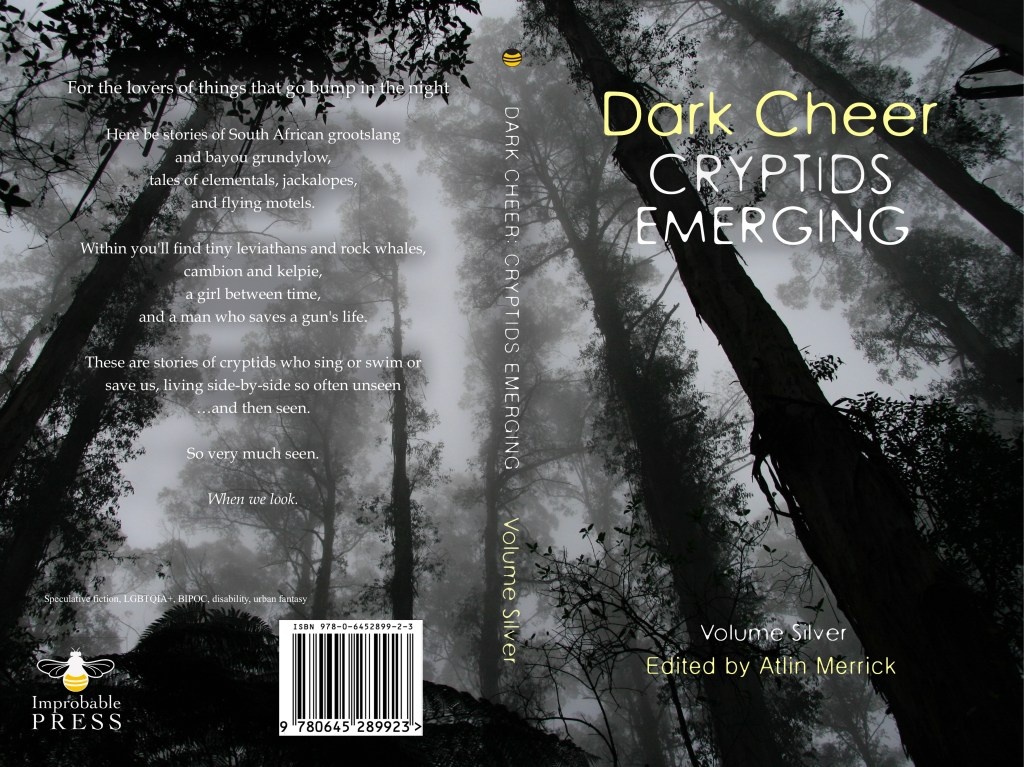
And preorders are up for “Dark Cheer: Cryptids Emerging”: Volume Blue is out in December, and my volume (Silver) is out in February. “Leviathan” is a modern-day retelling of the Biblical legend of the Leviathan—the king of the seas—mixed with a dash of “The Fisherman’s Wife.”

I also recently had the pleasure of attending the Rutgers University Council on Children’s Literature One-on-One Conference, which is application-only and competition is fierce. I got some great feedback on my MG girl-and-golem-fight-antisemitism novel, so I’m hopeful for the next round of queries.

(I will also be so much happier when events like this can be in person again. I miss my writer friends! I hate how I look on Zoom! The cat tries to break into my office!)

Everyone in this house is now vaccinated, and I hope you are too. Hoping you have a close-to-normal Thanksgiving, and if you also celebrate Hanukkah, hoping you squeeze in enough shopping time because argh, it’s early this year.

Telling our stories

Apropos of nothing (ha!), I’ve been thinking about which stories get told, and which don’t.

I never learned about Juneteenth in school, or the “Black Wall Street” massacre in Tulsa. And I learned more about the civil rights movement from Rep. John Lewis’ “March” books than I ever got in school. All of that makes me angry. How can we have useful conversations about racism if we don’t all have the necessary knowledge?

But I already knew that the history we were learning wasn’t complete, because sometimes I learned something different in Hebrew school.

For instance: the Crusades. I learned in elementary school that the Crusades led to the expansion of trade routes throughout Europe, and about how that impacted European civilization. I raised my hand and, shaking with the effort, pointed out that the Crusades also led to the slaughter of many Jews and Muslims, which was what I’d learned in Hebrew school. The teacher said “Mmm-hmm,” or some other non-response, and after a short pause, went on with her lesson. And I sat there, still shaking, realizing that I’d challenged the teacher for nothing.

If we’re going to teach history, we have to teach all of it. We shouldn’t be leaving out the parts that make us uncomfortable, or that might make our “side” look bad. All of it.

Which is why it’s so important for people from all backgrounds, with different experiences and perspectives, to be able to tell their stories. That’s how we learn. That’s how change happens.

I’m telling my stories. I hope you’ll tell yours.

Any writing counts

So recently I’ve written about a grocery service that delivers your order in reusable containers, then picks up the empties afterward; a (possibly?) haunted house that was featured on a ghost-hunting TV show; a trio of artist friends who’ve been exhibiting their work together since the ’80s; a book club discussion about white nationalism; and a popular teen “Real Talk” program at a Massachusetts library. The day job offers much variety.

None of this has much of anything to do with my fiction work. That’s fine. I don’t expect the day job to overlap with my kidlit projects. And many writers, artists, and other creative types have a day job of some sort. Because there are bills.

So, is it breaking my “brand” if I write about all these different things? Will it confuse people if they see my articles and also hear me talking about my manuscripts? I don’t think so. Everything you write is part of who you are, so why hide any of it?

Writing about one topic, in one particular style, doesn’t stop you from writing about other things as well. Switching up what you write about keeps your mind sharper. And the storytelling techniques are about the same no matter what story you’re telling. The real difference with me? The articles are about real people, and me quoting what they say. The manuscripts are about people who live in my head.

Writing is writing. The more you do it, the better you get, whether it’s a magazine article, a blog post, a press release, or a manuscript. Just make sure you set aside time to focus on the type of writing you love the most.


And then what happens?

In the great plotters vs. pantsers debate, I fall pretty firmly on the side of pantsers. I have a general idea of how the story is going to end, but I discover things about it as I write—who my characters are, what they want, where they’re going. It’s not quite freewriting (which is also a good exercise!), but not quite organized, either. It’s a little bit like story improv.

In improv, in order to keep a scene going, the performers onstage will play off each other, building a scene together line by line. There are no mistakes, and no one gets to say “no” and kill the scene. It’s called the “yes, and” principle. Usually this requires another human being or two, but you can do “yes, and” as a solo game.

The protagonist is at school and overwhelmed about something he’s struggling with. What does he do? He storms out of class. Then what happens? He sees something suspicious in town and runs to tell his father about it. Then what? His father shrugs it off, and his worries—about his problems and about the strange visitors—only grow, especially after . . .

Well, I haven’t written that far yet. But I hadn’t planned any of the above details when I started writing.

One action leads to the next one, and the next and the next. Eventually you’ve got a plot, and because it’s built off what the main character and supporting characters will do or say next, it’s focused on their needs and desires, which means you’ve gotten to know your characters very well.

I might not keep everything in this story-in-progress after I’ve written my way through it. But it’s a lot easier to see what’s working and what isn’t when I’ve got a full story in front of me.

This technique isn’t going to appeal to everyone, which is fine—there’s no one right way to write a story. But it works for me, and it might for you too. Just keep asking yourself: What happens next?